A coin meter for electricity
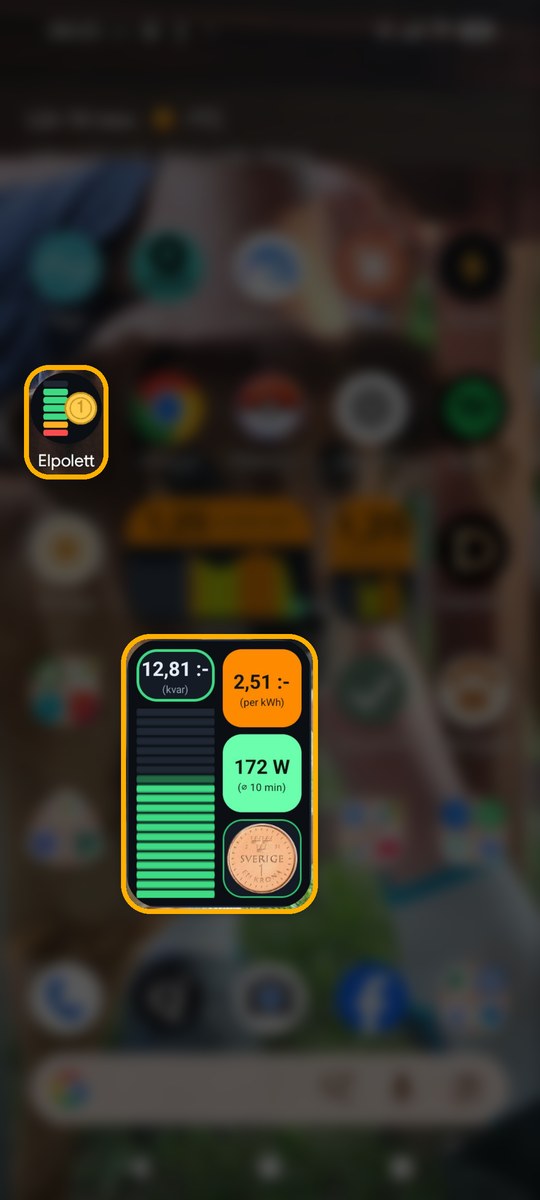
Elpolett borrows the design of 1950s prepaid gas meters. A column of lights shows how much electricity money is left, and one light goes out for every krona you use.
In the 1950s many Swedish homes had prepaid gas meters. You put in a coin, and when the money ran out, so did the gas. Nobody needed a chart to understand their consumption: you could feel it in your pocket.
Elpolett ("electricity token") is an experiment in bringing that feeling back for electricity, as part of the Feel the Energy project. A column of lights shows how much of a small balance is left. For every krona of electricity used, one light goes out from the top. At zero, a smart plug cuts the power, and a button tops it up one krona at a time.
Getting the cost right is harder than it sounds. Swedish household electricity has five parts: the hourly spot price, the retailer's markup, the grid transfer fee (with peak-hour rules), energy tax and VAT. The spot price alone, which is what most apps show, is often less than half the total. Elpolett prices every minute of consumption with the full model, using live readings from an energy meter.
Right now it's a web prototype that also runs as an app on the phone, which lets us test the concept for real at home. The goal is the same logic on a Raspberry Pi with real LEDs, a buzzer and a physical button. A companion widget shows the day's spot price at quarter-hour resolution without draining the phone's battery.
The design question we're interested in: does a budget that runs out change behaviour differently from a meter that counts up?
Comments? Reply on Bluesky @hedin.it.
Get new posts: Follow on Bluesky Follow on Facebook RSS feed How?